Back
Back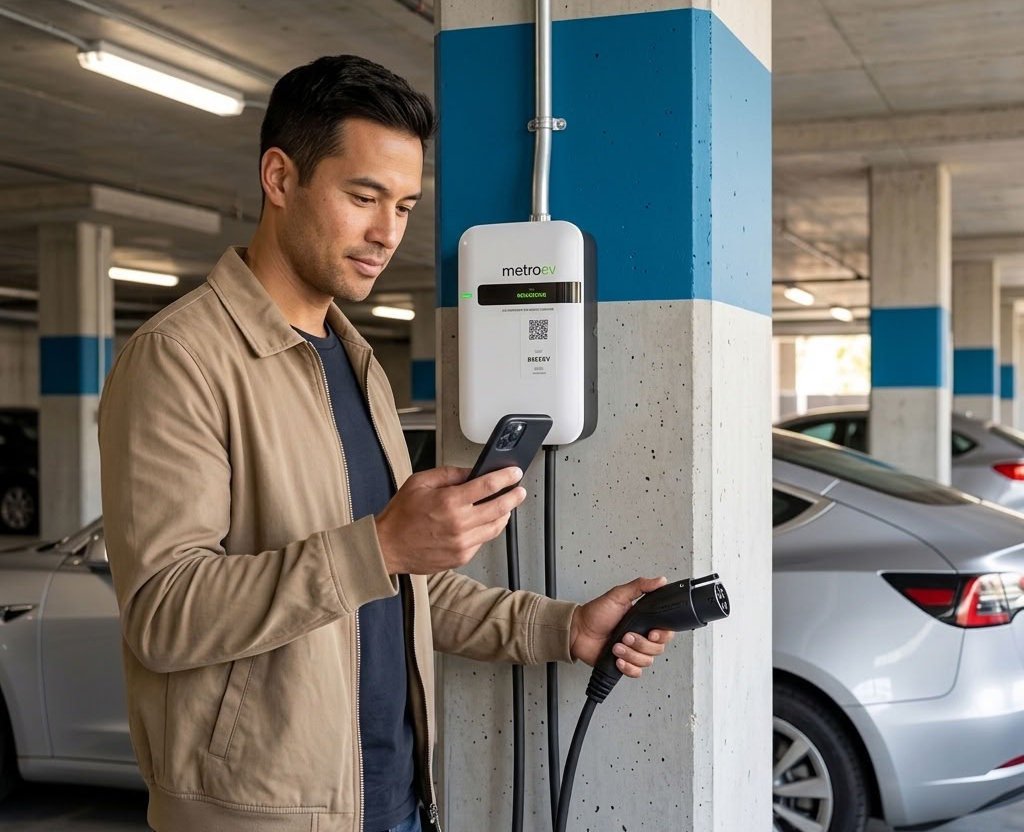
An EV charging management software allows condo buildings to track how much electricity each resident uses and charge them accordingly. The EV charging billing software connects the condo's EV chargers with an automated billing and payment system.
In this guide, we'll explain how condo EV charging billing works, how charging rates are calculated, what residents typically pay for, and what condo boards and property managers should look for in EV charging billing software.
What is an EV charging billing software?
EV charging billing software is a platform that tracks EV charging sessions and manages payments for charging station use.
When a resident plugs into a condo EV charger, the software can identify the user, record the amount of electricity used, calculate the cost based on the building's charging rate, and process payment.
For condo buildings, this can simplify several tasks, including:
- Tracking individual charging sessions
- Measuring electricity consumption
- Setting charging rates
- Automatically calculating an EV charging bill
- Processing resident payments
- Providing charging and billing reports
- Managing multiple chargers and users
- Monitoring charger activity
The software essentially connects the EV chargers, residents, electricity usage, and billing process in one system.
How does EV charging billing work in a condo?
The basic process for EV charging billing is relatively simple: a resident uses a charger, the charging software records the session, and the resident is charged based on their electricity consumption.
1. A resident starts a charging session
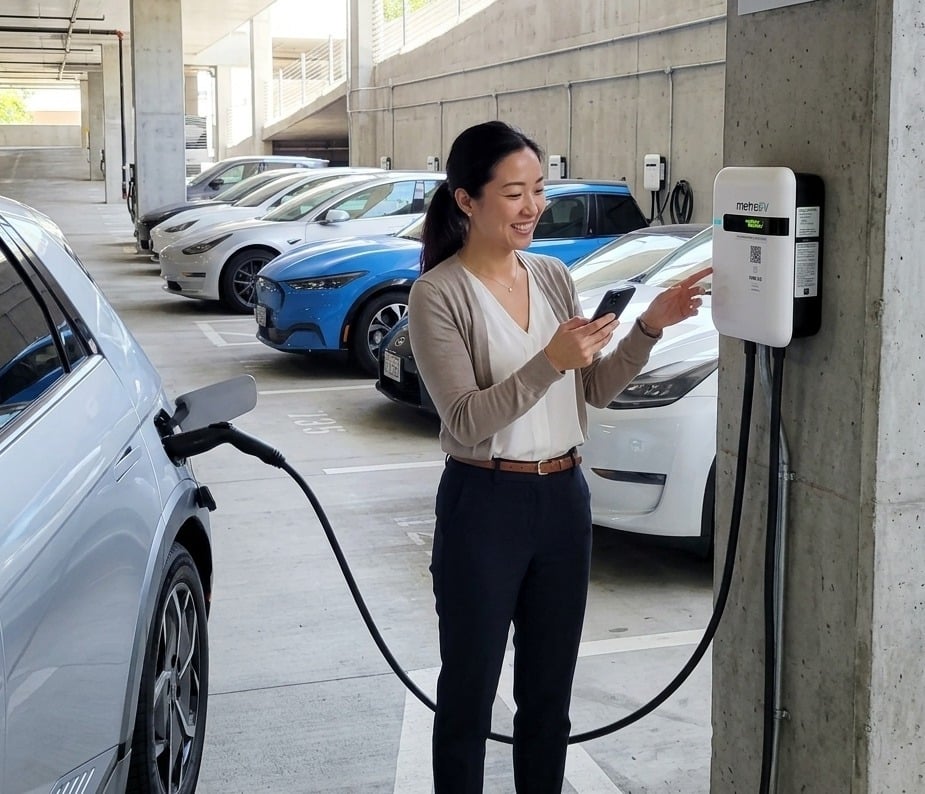
The resident connects their EV to an available charger. Depending on the charging system, they may start the session through a mobile app, RFID card, QR code, or another form of authentication.
The software identifies the resident or charging account associated with the session.

Earn 10¢ per kWh every time you charge
Available for new and existing customers, metroEV Rewards allows you to earn rewards every time you charge with metroEV.

2. The charger records electricity consumption
During the charging session, the system records how much electricity is delivered to the vehicle, typically measured in kilowatt-hours (kWh).
For example, if a vehicle receives 25 kWh during a charging session, the software records that amount against the resident's account.
Related: Understanding kW vs. kWh for EV Charging
3. The charging rate is applied
The condo can establish a rate for EV charging. This may be based on the building's electricity costs and the condo corporation's chosen billing structure.
The software automatically calculates the cost of the charging session based on the applicable rate and will show you the final cost on your EV charging bill and transaction history. This means the condo corporation does not have to manually calculate every resident's electricity consumption.
Related: Understanding Types of EV Charger Fees for Condos, Stratas and Multi-Unit Residential Buildings
4. The resident pays for their charging
Once the charging session is complete, the resident will be automatically charged through the payment system connected to the EV charging software. Depending on the EV charging software, residents can pay through an app, credit card, or another supported payment method.
5. The condo can access billing reports
Property managers and condo boards can use the EV charging software to review EV charging bills, charging activity, electricity consumption, payments, and other usage data. This provides greater visibility into how the building's EV charging infrastructure is being used.
Who pays for EV charging in a condo?
In many condo charging setups, the individual EV owner pays for EV charging themselves rather than having the entire building absorb the cost. This is one of the main advantages of using EV charging billing software.
Instead of dividing the building's EV charging electricity costs among all residents, the system can attribute charging consumption to the resident who used the charger. This can create a fairer cost structure, particularly as more residents begin driving EVs.
However, the exact billing arrangement depends on the condo corporation's policies, ownership structure, charging infrastructure, and agreements with its EV charging provider.
Related: Private or Shared EV Chargers? How to Choose the EV Charging Solution for Your Condo Building
Common condo EV charging rate structures
A condo corporation can work with its EV charging provider to establish how residents will be charged. Common EV charging rate structures include:
Cost per kWh
A condo can charge residents based on the amount of electricity they use, measured in kilowatt-hours (kWh). The per-kWh rate can be based on the building's electricity costs, remain fixed, or change depending on the time of day.
For example, a condo could set a fixed rate of $0.10/kWh, regardless of when a resident charges their vehicle.
Cost-based billing
The condo charges residents based primarily on the building's electricity cost.
For example, if electricity costs the building $0.18/kWh, the condo may set its EV charging rate around that amount, depending on the condo's policies and other costs.
Time-of-Use (TOU) pricing
Time-of-Use pricing is a type of cost-per-kWh billing where the rate changes depending on when the EV is charged. This can allow the charging rate to reflect the building's electricity costs during different periods of the day.
For example, a condo could set:
- 7 p.m. to 7 a.m. (off-peak): $0.08/kWh
- 7 a.m. to 11 a.m. (on-peak): $0.20/kWh
- 11 a.m. to 5 p.m. (mid-peak): $0.15/kWh
- 5 p.m. to 7 p.m. (on-peak): $0.20/kWh
With this approach, the resident's EV charging bill is calculated based on how many kWh they use and the applicable rate during their charging session.
Flat per-kWh rate
The condo establishes a fixed price per kWh, regardless of when the resident charges.
For example:
$0.25/kWh × electricity consumed = charging cost
This approach is straightforward and makes charging costs easy for residents to understand and predict.
Time-based or connection and service fees
A condo may charge additional fees based on how long a vehicle charges, how long it remains parked or plugged in, or the number of charging sessions.
For example, a condo could apply a connection, service fee, or increase its per-kWh rate by a few cents in addition to the cost of electricity used. These fees can help the condo recover the costs of installing and operating its EV charging infrastructure.
This type of pricing structure may be more common with communal EV chargers, where the condo corporation owns and manages the charging equipment and is responsible for the associated installation and operating costs.
What should condo boards look for in EV charging billing software?
When evaluating EV charging billing software, condo boards and property managers should look beyond basic payment processing. Consider whether the platform offers:
Accurate energy tracking: The system should reliably record electricity consumption for each charging session.
Automated billing: Look for software that can calculate charges and process payments without requiring extensive manual work.
Transparent resident reporting: Residents should be able to easily understand their charging activity and EV charging bill.
Load management: Buildings with multiple chargers may benefit from software that can intelligently manage available electrical capacity.
Remote monitoring: Property managers should be able to see charger status and identify potential issues.
Flexible pricing: The software should support the condo's preferred charging rate and billing structure.
Scalability: The system should be able to support additional chargers and residents as EV adoption increases.
Reliable support: Having access to technical support can make it easier to resolve charging or billing issues.
Learn more about EV charging software for condos.
Simplify condo EV charging With metroEV
EV charging doesn’t have to create additional administrative work for condo boards and property managers. With the right infrastructure and EV charging billing software, charging activity can be tracked, costs can be allocated to individual users, and payments can be managed through one system.
Looking to simplify EV charging at your condo? Contact metroEV to discuss an EV charging solution for your building.
Learn more:
What Is The Best EV Charging Solution For Your Condo Building?
EV Charging for Property Managers: 4 Key Considerations
6 Factors to Consider When Planning Your EV Charging Infrastructure For Condos
Explore more:
Condo EV Charging Solution
Condo EV Charging Software
Completed Condo EV Charging Projects

AUTHOR
Isaac Klein
Isaac Klein, Vice President at metroEV, leads the development and deployment of small to large-scale EV charging solutions and charger networks across condos, commercial and public properties. With deep expertise in EV technology and sustainable infrastructure, Isaac has shaped metroEV into a go-to partner for future-ready charging solutions. He’s known for turning complex projects into streamlined installations—helping buildings and properties across Canada stay ahead of the EV curve.
.png)

 Recent EV Charger Installations
 0 unit infrastructure
 1 charging stations