Back
Back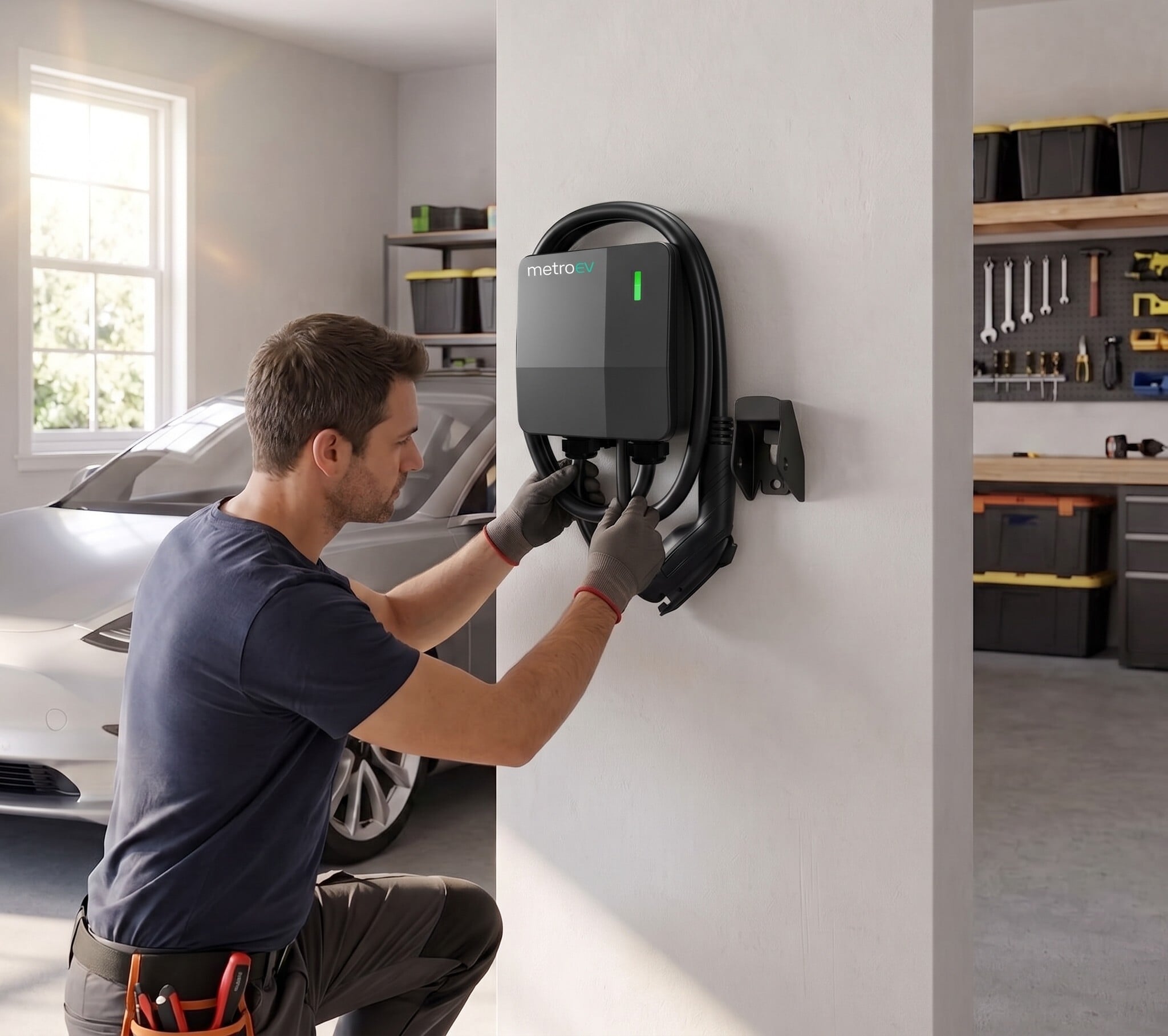
Installing an EV charger at home involves adding dedicated electrical equipment and, in most cases, new electrical wiring to your home. In Ontario, this work must follow the Ontario Electrical Safety Code and requires an EV charger installation permit, formally referred to by the Electrical Safety Authority (ESA) as a Notification of Work.
Important safety and permitting note: EV charger installation involves electrical work that must comply with Ontario's electrical safety requirements. Homeowners should hire a properly licensed Electrical Contractor (LEC) to complete the installation and confirm that all required permits, ESA Notifications of Work and inspections are handled. The contractor performing the work is responsible for ensuring the electrical work and applicable notification requirements are addressed. This article is for general informational purposes only and should not be relied on as electrical, legal or permitting advice. Requirements may vary depending on the installation.
For a professional home EV charger installation, your Licensed Electrical Contractor handles the electrical work and files the required notification with ESA before the installation begins. Understanding how the EV charger installation permit process works can help homeowners know what to expect when hiring an electrician to install a Level 2 EV charger.
What is an EV charger installation permit in Ontario?
An EV charger permit in Ontario is the electrical Notification of Work filed with ESA for the installation. The notification provides ESA with a permanent record of the electrical work being completed and allows the installation to be reviewed for compliance with the Ontario Electrical Safety Code.
For a professionally installed EV charger, your licensed electrician handles this process for you. The electrician files the Notification of Work before starting the electrical installation and coordinates any required review or inspection with ESA. Homeowners generally do not need to separately file the notification when their licensed electrician is managing the installation.

Earn 10¢ per kWh every time you charge
Available for new and existing customers, metroEV Rewards allows you to earn rewards every time you charge with metroEV.

How does the EV charger installation permit process work in Ontario?
Before electrical work starts, the electrician files the required Notification of Work with ESA.
ESA's electrical safety guidance states that new electrical installations require a notification. The exemptions under Rule 2-005 apply only to certain types of electrical work and do not exempt work that involves installing, extending, altering, or repairing electrical wiring.
A typical Level 2 EV charger installation may involve installing a dedicated branch circuit, breaker, wiring and charging equipment, which is why the ESA notification forms part of the installation process.
You do not normally need to coordinate this separately when you hire a licensed electrician; it is handled as part of the electrical work.
2. Your licensed electrician coordinates the ESA review or inspection
After the notification has been filed and the electrical work is completed to the appropriate stage, your electrician coordinates the ESA review process.
Whether an on-site inspection is required can depend on the installation and ESA's assessment of the work.
Where an inspection is required, electrical work that will be concealed or buried must be available for inspection before it is covered.
If ESA identifies an issue with the installation, a defect notice may be issued outlining the corrections required to comply with the Ontario Electrical Safety Code. Your electrical electrician is responsible for addressing those deficiencies as part of completing the installation properly.
3. Your licensed electrician provides the ESA Certificate of Acceptance
Once the electrical work has been reviewed and accepted by ESA, a Certificate of Acceptance is issued to the party that filed the notification. This document confirms that the electrical work has been reviewed and meets the Ontario Electrical Safety Code.
The certificate provides documentation that the electrical installation has gone through ESA's required review process and is useful to keep with your home records, including for insurance or a future home sale.
If your electrician filed the notification, they should provide you with a copy of the certificate after the work has been completed.
Do I need a permit to install an EV charger in Ontario?
Yes. If your EV charger installation involves new electrical wiring or a new circuit, an ESA Notification of Work is required before the work begins.
A typical Level 2 home charger requires a dedicated circuit between your electrical panel and the charger. Because this involves new electrical wiring, it falls outside the limited exemptions outlined in ESA Bulletin 2-3-19.
What is the ESA Bulletin 2-3-19?
ESA Bulletin 2-3-19, “Notification not required,” explains the limited situations where electrical work can be completed without filing a Notification of Work under Rule 2-005 of the OESC.
The bulletin was issued in May 2025 and replaced the previous Bulletin 2-3-18. It clarifies which types of electrical work are exempt from notification requirements.
For homeowners, the important takeaway is that these exemptions are limited. The bulletin specifically explains that the exemptions do not include installing, extending, altering, or repairing electrical wiring. New electrical installations require notification regardless of who performs the work.
This is why a new home EV charger installation that requires new electrical wiring generally requires an EV charger installation permit.
Who can install an EV charger in Ontario?
A licensed electrician or Licensed Electrical Contractor (LEC) must install your home EV charging station in Ontario. EV charger installation involves electrical work that can present serious safety risks if it isn't completed correctly.
If you hire someone to perform electrical work in your home, Ontario requires that person to be a licensed electrician. General handymen and other service providers cannot perform electrical work unless they hold the appropriate ECRA/ESA licence.
A licensed electrician can:
- Assess your home's existing electrical system
- Determine whether your electrical panel can support the charger
- Install the appropriate circuit and wiring
- File the ESA Notification of Work
- Arrange the required inspection
- Correct any deficiencies identified during the inspection
- Provide the ESA Certificate of Acceptance after the work passes
Before hiring an electrician, confirm that they are licensed to perform electrical work in Ontario. Every licensed electrician will have a Contractor Licence Number (or ESA number) that you can verify on the ESA’s Contractor Locator Tool if you “Search by Contractor”.
Related: 32A vs 48A Charging: Which EV Home Charger Is Right for You?
Get your home EV charger installation started
In Ontario, most home EV charger installations involving new electrical wiring or circuits generally require an ESA Notification of Work. Before proceeding, homeowners should confirm the requirements for their specific installation and hire a properly licensed Electrical Contractor to complete the electrical work and manage the applicable notification and inspection process.
Homeowners are responsible for selecting a qualified contractor and confirming that the required electrical work, notifications and inspections are completed. Do not begin installation until the contractor has confirmed the applicable requirements.
This article is intended as a general guide only. Electrical codes, permitting requirements and inspection procedures may change or vary by project. metroEV does not provide electrical, legal or permitting advice through this article, and the information provided should not replace guidance from the Electrical Safety Authority (ESA) or a licensed electrical professional.
If you're planning to install an EV charger at home, contact metroEV to learn more about your home EV charging options.
Learn more:
How to Install an EV Home Charging Station
32A vs 48A Charging: Which EV Home Charger Is Right for You?
Understanding Home Electrical Panel Requirements for EV Chargers

AUTHOR
Isaac Klein
Isaac Klein, Vice President at metroEV, leads the development and deployment of small to large-scale EV charging solutions and charger networks across condos, commercial and public properties. With deep expertise in EV technology and sustainable infrastructure, Isaac has shaped metroEV into a go-to partner for future-ready charging solutions. He’s known for turning complex projects into streamlined installations—helping buildings and properties across Canada stay ahead of the EV curve.
 Recent EV Charger Installations
 0 unit infrastructure
 1 charging stations