Back
Back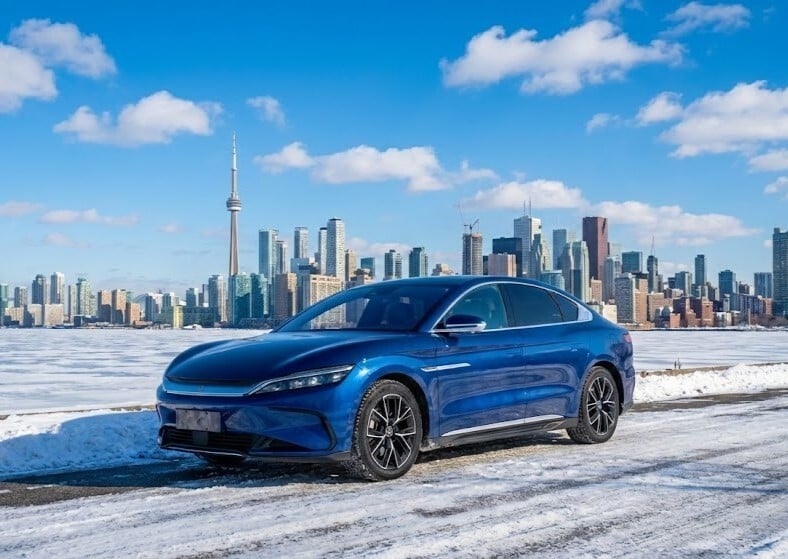
A development in Canada’s electric vehicle (EV) import policy is opening the door to Chinese EVs, sparking curiosity and debate among industry stakeholders, policy makers, and everyday Canadians.
What’s changed?
Under the new Canada-China trade agreement, Canada will allow up to 49,000 electric vehicles from China to be imported each year at a reduced tariff of 6.1%, a sharp drop from the previous 100% tariff. The new tariff only applies to vehicles within the annual quota, roughly matching the number of Chinese EVs Canada imported before the 2024 tariff increase.
This trade agreement is part of a broader effort to strengthen trade relations between Canada and China, including lowering tariffs on certain Canadian agricultural exports, signaling a wider effort to boost trade between these countries.
Why the shift matters:
The decision marks a significant shift in Canada’s EV strategy.
- Lower prices for consumers: Cheaper imports could make EVs more accessible to Canadians, helping accelerate EV adoption in a market where electric vehicles remain more expensive compared to many other countries. The Prime Minister of Canada official website anticipates that within five years, more than half of these imported EVs could be priced under $35,000, creating new affordable options for Canadians.
- Impact on domestic industry: Domestic automakers and labour groups have raised concerns that even with limited subsidized Chinese imports, opening the market could put pressure on local manufacturing jobs and supply chains. To address this, Canada expects the agreement to accelerate partnerships between the two countries for EV production, supporting local jobs and strengthening the EV supply chain.
Supportive consumer views
Public opinion seems more open than opposed to the new Canada-China trade agreement. Sources found that roughly 60% of Canadians support allowing more Chinese EVs into the market. Many see the potential benefits in terms of greater choice and lower prices. Still, many voiced concerns about vehicle quality, data privacy, and the potential impact on Canadian auto manufacturing.
Some economists and clean‑energy advocates see the move as a way to boost EV adoption and reduce emissions, partly by increasing consumer access to more affordable models.
Concerns from industry and labour
Not everyone is on board with the Canada-China trade-agreement.
Unifor, Canada’s largest private‑sector union, has warned that allowing more Chinese EVs into the market could threaten Canadian jobs and the auto industry, pointing to concerns over state subsidies and unfair competition.
Industry voices also highlight ongoing challenges in North America’s auto industry: global supply chain shifts, competitive pressures from U.S. policies, and navigating fair trade while responding to China’s expanding EV market.
How this fits into global trade dynamics
Canada isn’t acting alone. After years of high tariffs that mirrored U.S policies, the new import rules signal both the resolution of a trade dispute and a shift in how Canada positions itself on the EV market.
Other regions, like the European Union and United States, have also faced similar challenges, trying to balance competition, fair trade, and industrial policy in response to China’s rapidly expanding EV industry.
The road ahead for Canadians
For Canadian drivers, the immediate impacts will probably be limited as the quota represents less than 3% of total vehicle sales. Over time, though, competition from imported models could influence:
- Pricing and vehicle options at dealerships
- Domestic production goals for Canadian automakers
- Service and infrastructure adaptation for new brands
- Trade, labour, and climate goals
Ultimately, Canada positions itself in a fast-changing global market with the expansion of trade and investment partnerships.
Learn more about the Canada-China trade agreement on the Prime minister of Canada official website.

Planning to install EV chargers for your property?
We're here to have your questions answered and to get started. Contact us to get a free, custom EV charger quote.
Related:
Canada Announces New Electric Vehicle Affordability Program and a Boost in Infrastructure Investment
Rising EV Demand in Canada: Why Are More Canadians Choosing EVs?
Explore more:
EV Charger Rebates in Canada
Ontario EV Charger Rebates
EV Charger Rebate BC
ChargeON Program

AUTHOR
Isaac Klein
Isaac Klein, Vice President at metroEV, leads the development and deployment of small to large-scale EV charging solutions and charger networks across condos, commercial and public properties. With deep expertise in EV technology and sustainable infrastructure, Isaac has shaped metroEV into a go-to partner for future-ready charging solutions. He’s known for turning complex projects into streamlined installations—helping buildings and properties across Canada stay ahead of the EV curve.



 Recent EV Charger Installations
 0 unit infrastructure
 1 charging stations